Safety Officer and HSE Jobs in Qatar 2026: Certificates, Salary and How to Get Hired
Safety officer and HSE jobs are in steady demand across Qatar's construction, oil and gas and facilities sectors. Here is which certificates employers ask for, how client approvals work, the heat stress rules you must know and what HSE staff earn in 2026.
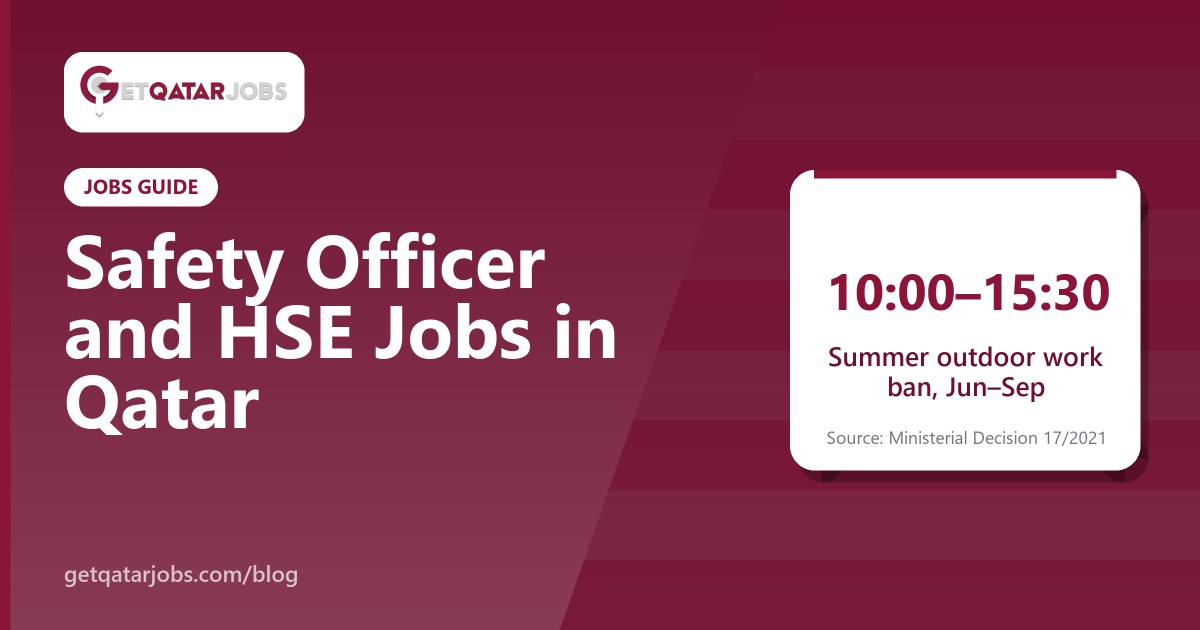
Table of contents
Last reviewed: 26 October 2026. Requirements differ between employers and project clients; always check the job advert.
Short answer: most safety officer jobs in Qatar ask for an internationally recognised HSE qualification, usually NEBOSH IGC (sometimes IOSH or OSHA 30), plus 2–5 years of site experience, ideally in the Gulf. On oil and gas and major government projects, the client often has to approve you before you start. Safety officers typically earn about QAR 4,000 to QAR 4,500 a month plus benefits, while experienced HSE engineers and managers on large projects earn considerably more.
Key takeaways
- The most requested certificate is NEBOSH IGC; IOSH Managing Safely and OSHA 30 are common alternatives or extras.
- Oil and gas and public works projects often require client-approved HSE staff, so keep copies of your certificates and experience letters ready.
- Qatar bans open-air work from 10:00 to 15:30 between 1 June and 15 September, and safety officers help enforce it.
- Typical pay: about QAR 4,000–4,500 for safety officers, more for HSE engineers, advisers and managers.
- GetQatarJobs listed over 100 open safety and HSE jobs in October 2026.
Who hires safety officers in Qatar?
- Construction contractors building roads, utilities, housing and commercial projects.
- Oil, gas and LNG operators and their contractors at Ras Laffan, Mesaieed and Dukhan, a sector that keeps growing with the North Field expansion.
- Facilities management companies looking after malls, towers, hospitals and stadiums.
- Manufacturing and logistics sites, including warehouses and factories.
- Hotels, restaurants and food producers, which hire food safety officers.
Which certificates do you need?
Employers set the requirements for most safety officer jobs, based on the project and the client. The most common requests are:
- NEBOSH International General Certificate (IGC): the standard for safety officers. Some adverts specify a minimum certification date or ask for the newer syllabus.
- IOSH Managing Safely or OSHA 30-hour: common for supervisors and as an extra.
- A NEBOSH Diploma or a degree in occupational safety or engineering for HSE engineers, advisers and managers.
- Specialist training: first aid, fire safety, permit to work, confined space, scaffolding, working at height and lifting operations.
- Food safety: HACCP and food hygiene certificates for food safety officer roles in hospitality and food production.
On many oil and gas and public works projects, HSE staff must be approved by the client before they can work on site, which is why adverts mention "approved" HSE officers. Approval usually means the client reviews your CV, certificates and experience, and may interview you.
Qatar's 2026 Labour Law amendments (Law No. 9 of 2026) also let the Ministry of Labour require professional licences, approved training and competency assessments for designated professions. The detailed rules are still to come, so keep your certificates current and verifiable.
What does a safety officer do in Qatar?
- Carries out site inspections and risk assessments, and runs toolbox talks.
- Manages the permit to work system for hot work, excavation, confined spaces and lifting.
- Investigates incidents and near misses and writes reports.
- Applies the Qatar Construction Specifications (QCS) and the client's HSE plan on construction projects.
- Enforces heat stress controls: work-rest cycles, water, shade and the summer midday ban.
Heat stress rules every safety officer must know
Under Ministerial Decision No. 17 of 2021, work in open-air workplaces is banned from 10:00 to 15:30 every day between 1 June and 15 September. Regardless of the time, work must stop whenever heat stress rises above the safe limit at a workplace. Employers must carry out a heat stress risk assessment, keep it on site for labour inspectors, provide cool drinking water, shade and rest areas, and let workers rest when they need to. The Ministry of Labour can take legal action against violators, including suspending work at sites that break the rules.
What do safety officers earn in Qatar?
| Role | Typical monthly salary (QAR) |
|---|---|
| Safety officer (NEBOSH, 2–5 years' experience) | 4,000–4,500 |
| Senior safety officer / HSE supervisor | Above safety officer pay |
| HSE engineer / adviser (oil and gas, major projects) | Considerably more, often with a full package |
Safety officer range from 2026 Qatar job adverts and GulfTalent salary data (average QAR 4,500). Many adverts don't show pay, so senior pay varies widely.
Packages often add accommodation or a housing allowance, transport and overtime, especially on construction projects. Salaries are tax-free; see our average salary in Qatar guide.
How to get a safety officer job in Qatar
- Get NEBOSH IGC if you don't have it. It's the first filter on most adverts.
- Show Gulf and sector experience. List project types, values, workforce sizes and clients.
- Quantify your safety record, for example "1.2 million man-hours without a lost-time injury".
- Keep certificates and experience letters ready for client approval.
- Use a clear CV in the format Qatar employers expect; see our CV guide for Qatar jobs.
- Never pay recruitment fees. They're illegal under Qatar's Labour Law, and the employer pays for your visa. See our Qatar work visa guide.
Find safety officer jobs now
Create a free GetQatarJobs account and browse construction jobs, oil and gas jobs or engineering jobs in Qatar, where most HSE roles are listed. Warehouse safety is covered in our warehouse and logistics jobs guide.
Hiring HSE staff? Employers can post safety jobs free on GetQatarJobs, with unlimited job posts.
Sources
- Ministerial Decision No. 17 of 2021 on heat stress (Ministry of Labour; ILO Project Office for the State of Qatar)
- Law No. 9 of 2026 amending the Labour Law (professional licensing), as summarised by law firms, July 2026
- Qatar Labour Law No. 14 of 2004 (occupational health and safety; Article 33 ban on recruitment fees)
- GulfTalent salary data for Qatar; 2026 Qatar HSE job adverts (certificates and pay)